Blogs > The Law Blogger

The Law Blogger is a law-related blog that informs and discusses current matters of legal interest to readers of The Oakland Press and to consumers of legal services in the community. We hope readers will  find it entertaining but also informative. The Law Blogger does not, however, impart legal advice, as only attorneys are licensed to provide legal counsel.
For more information email: tflynn@clarkstonlegal.com

Tuesday, February 6, 2024

Groundbreaking Manslaughter Case Submitted to Oakland County Jury

There can be no doubt that America is in the midst of a protracted epidemic of mass shootings. Over the past decade, barely a month goes by where we are not treated to horrific headlines from some type of shooting where multiple people are killed. 

A mass shooting in the United States is defined as an incident where four or more people are shot, wounded, or killed in a single event, not including the shooter. On November 30, 2021, four students were killed by another student at Oxford High School in Oakland County, MIchigan. 

The case against Jennifer Crumbley, Mother of the Oxford High School shooter, was submitted to an Oakland County jury last Friday. The shooter's father is scheduled for trial in March. In this pair of truly groundbreaking cases, the shooter's parents were each charged with four counts of involuntary manslaughter. Their son has already pled guilty to four counts of first degree murder and was sentenced as an adult to life without the possibility of parole. 

Groundbreaking Case; Complicated and Unusual Circumstances

America has become accustomed to mass shootings; we've become numb to these frequent tragic events and their painful aftermath. Congress cannot pass effective gun control measures and, even if they did, our Second Amendment right to bear arms is a foundational bar to comprehensive gun regulation. 

Mass shootings usually end with the shooter taking his or her own life, or being charged with multiple counts of murder and other capital felonies. In Michigan, a capital felony is any crime where life imprisonment is a potential sentence upon conviction. 

Mental illness is highly correlated with mass shootings; a very high percentage of mass shooters have some form of acute mental illness. The Crumbley case is no different.

The Oxford High School shooting was the first mass shooting -according to the above referenced definition- in Oakland County, Michigan. The case has some very unusual factual aspects. 

First, following the shooting, the Oakland County Sheriff attempted to locate the shooter's parents but were unable to do so because, as it turned out, they went on the lam in Detroit. As a result, the Oakland County Sheriff scrambled a state-wide manhunt for James and Jennifer Crumbley, locating them cowering in a warehouse in the 313.

Second, the Crumbleys allegedly purchased the Sig Sauer 9 mm used in the shooting rampage for their son as a Christmas gift, although he was not elibigle to legally own or possess a gun due to his minority. Jennifer Crumbley testified in her own defense; always a highly risky prospect. She testified that she helped her son research and purchase the weapon.

Third, any time an attorney allows her client to testify, evidentiary doors often get opened that damage the defendant on cross examination. In this case, Jennifer Crumbley testified about her son's text communications about ghosts and demons; trying to explain it all away and to justify why she neglected to get her son professional help. 

The jury heard evidence that Jennifer thought her son was "weird"; that his only hobby involved shooting guns; that they, as a family, made trips to the shooting range; that she researched mental illness on the eve of her son's shooting rampage, but never took him to a professional or even thought he had a mential illness. 

On and on it goes. No wonder the Oakland County Prosecutor believes she can convict on a manslaughter theory. Technically, the prosecutor tried the case under two separate and distinct manslaughter theories; more on that below. 

To be fair, national headlines and publicity notwithstanding, the prosecutor had to bring these charges. Under such facts, not to do so would be political suicide. Nor could she have extended the Crumbleys any plea offer; also political suicide. Karen McDonald had to go to a jury trial in this case. In Michigan, county prosecutors are up for election every four years. In the midst of America's mass shooting epidemic, lack of parental supervision is a legitimate theory to assign culpability in some cases. 

In some ways, the Crumbleys are in a similar liability position as the parent of an infant or toddler who staggers into a room with a loaded weapon and shoots someone. We've seen dozens of such cases across the country. 

Jury Instructions

In criminal cases, there are a set of standard jury instructions that set forth some of the basic procedural and substantive concepts involved in our criminal justice system. They are standard to the extent that they are read to juries in every criminal case. There are also special jury instructions that cover some of the unique circumstances of a particular case, like the case of the Crumbley parents.

The Oakland County jury was charged with the following instructions for involuntary manslaughter. The jury instructions, read to the jury by Oakland County Circuit Judge Cheryl Matthews, included two separate theories of manslaughter; one involving the legal duty of due care contained within the concept of neglegence, the other involving gross neglegence. 

Regarding the gross negligence theory, Judge Matthews charged the jury that the Oakland County Prosecutor had the burden to prove each of the following two elements beyond a reasonable doubt, which is the highest evidentiary burden in Michigan:
  • First, that the defendant caused the death of the student(s), that is, that the student(s) died as a result of storing a firearm and its ammunition, so as to allow access to the firearm and its ammunition by her minor child; and 
  • Second, in doing the act that caused the student's death, the defendant acted in a grossly negligent manner.
These instructions were repeated for each of the four deceased Oxford High School students. 

Regarding the ordinary negligence theory, a special jury instruction was fashioned and read to the jury:

The defendant is charged with the crime of involuntary manslaughter resulting from the failure to perform a legal duty. To prove this charge, the prosecutor must prove each of the following elements beyond a reasonable doubt:
  • First, that the defendant had a legal duty to the decedent. The legal duty here is one imposed by law. In Michigan, a parent has the duty to exercise the duty of reasonable care to control their minor child so as to prevent the minor child from harming others or prevent the minor child from conducting themselves in a way that creates an unreasonable risk of bodily harm to others. This duty arises when both of the following are true: a) the parent knows or has reason to know that they have the ability to control their minor child; and b) the parent knows the necessity and opportunity to exercise such control.
  • Second, that the defendant knew of the facts that gave rise to the duty.
  • Third, that the defendant neglected or refused to perform that duty and that her failure to perform it was grossly negligent to human life.
  • Fourth, that the death of the student(s) was directly caused by defendant's failure to perform this duty, that is, that the student(s) died as a result of the defendant's failure to exercise reasonable care to control her minor child so as to prevent the minor child from intentionally harming others or the minor child from so conducting himself so as to create an unreasonable risk of bodily harm to others when the defendant knew she had the ability to control her minor child and knew of the necessity and opportunity to do so. 
The jury was also instructed that the shooter's act of shooting was reasonably foreseeable; they were instucted that either or both of the prosecutor's theories were sufficient to convict the defendant. Because one of the prosecutor's witnesses qualified as an expert in computer forensics, the jury was instucted on consideration of expert witness testimony; that they did not have to believe the expert's opinion but that they needed to decide how much weight to give to such testimony. 

Because this is truly a momentus case under the intense scrutiny of our national media, the jury could be out for several days considering the complex jury instuctions. 

Involuntary Manslaughter Law in Michigan

Involuntary manslaughter is a 15-year felony meaning that if convicted, Jennifer Crumbley faces up to 15-years in a Michigan Department of Corrections prison. Normally, defendants without significant prior felony convictions do not receive the maximum sentence. 

But this is not a normal case; this is a high-profile case that has the attention of the entire nation because it is believed to be the first time the parents of a mass shooter have been charged with manslaughter. 

Unlike voluntary manslaughter, involuntary manslaughter does not require establishing an intent to kill the victims. Involuntary manslaughter is highly circumstance dependent. The Michigan Supreme Court has described it as:
Involuntary manslaughter is the killing of another without malice and unintentionally, but in doing some unlawful act not amounting to a felony or naturally tending to cause death or great bodily harm, or in negligently doing some act lawful in itself, or by the negligent omission to perform a legal duty. 
This definition from our common law, of course, ties into the jury instructions above. Clear as mud, right?

An average juror, understandibly, may have some difficulty keeping the concepts straight. Judge Matthews did instruct the Crumbley jury that they could convict Jennifer Crumbley if they were convinced of either of the prosecutor's theories of culpability, i.e. the gross negligence theory or the breach of parental legal duty theory.

Full Disclosure

We here at the Law Blogger go way back with many of the players in these groundbreaking cases. We've known Judge Matthews since she was an assistant prosecutor in Oakland County; this blogger appeared before Judge Matthews just last week; our lawyers go back with Oakland County Prosecutor Karen McDonald to the days when she was a family law lawyer with the Dickenson firm, and then a family court judge; we have had cases where Karen McDonald represented the opposing party and we appeared before former judge McDonald in dozens of cases when she was on the family court bench. 

We've known defense counsel Shannon Smith, and currently have our own capital case with Smith's former law partner Mariel Lehman, James Crumbley's defense counsel. Our law firm has had to coordinate the trial in our capital case in Livingston County with James Crumbley's trial. 

So, along with the rest of the country, we will anxously await the jury verdict in this groundbreaking case and the in the James Crumbley case. A guilty verdict could redefine a parent's duties to control the conduct of their minor children; something that many Americans believe is long overdue. 

On the other hand, Michigan jurisprudence has long been settled that the criminal acts of third parties are not deemed to be foreseeable. Should an exception be made when the criminal actor is your minor child? 

Post #638


Labels: , , , , , , , ,

Saturday, December 17, 2011

Michigan's Parole Process Explained

From time to time, our appellate clients asking about the parole process.  One way or another, incarceration and parole affects all of us; adding significant costs to maintain our freedom.

An effective criminal justice system depends on the ability of that system to reintegrate the overwhelming majority of convicted felons that have served their bit, back into some semblance of productive society.

The purpose of this post is to explain Michigan's parole process to our readers.  Whether you are a tax paying citizen, or someone with a direct connection to the MDOC, the costs and procedures affect everyone.

Here are the basics...

The Parole Board.
The Parole Board in Michigan was recently reduced in 2011 from 15 members to the current 10 members. The parole board members are appointed by the Director of the Michigan Department of Corrections (MDOC). The Board is the sole paroling authority for felony offenders committed to the MDOC. Members serve 4, 3, and two year terms. Regular meetings are convened by the board to assess and decide parole applications.

The Parole Eligibility Report.
A felony offender must serve the minimum sentence with the MDOC prior to becoming eligible for parole. A Parole Eligibility Report (PER) is prepared on behalf of the applicant by a staff member of the MDOC. This report informs the parole board of the background of an inmate-applicant, and makes sure the applicant's parole file is complete.

The PER also makes recommendations to the parole board for each applicant, taking "misconduct" tickets and the prior criminal record into account. The generation of this report is a critical step in the parole process.

If an applicant has not completed all of the requirements set forth in the judgment of sentence, or if his file is otherwise incomplete, this is noted in the report and parole will be denied.

The Parole Board's staffers use the PER to score a prisoner's parole guidelines. These statutorily-mandated parole guidelines form the backbone of the parole process.

The Parole Interview.
Upon submissions of a prisoner's PER, the prisoner is eligible to participate in an informal and non-adversarial interview with one or more Parole Board members assigned to the prisoner's parole panel. After this interview, a Case Summary Report is generated for the Parole Board's review.
This interview is an excellent opportunity for the prisoner to address members of the board, face-to-face, in order to make a positive impression on his candidacy for parole. The prisoner can address major misconduct tickets, and explain how and when he plans to complete any missing training requirements in order to enhance his eligibility for parole.

Of course, in a perfect world, the prisoner will have completed all required components set forth in his judgment of sentence. This is why good lawyering is so important at the trial phase of the accused's case. Corrections to the presentence investigation report must be made in the lower court as this is the “bible” relative to the prisoner as far as the MDOC is concerned. An inmate will be forced to live within the confines of any errors unless they are corrected on appeal within the timelines set out in the Michigan Court Rules.

Transition Accountability Plan.
Under the Michigan Prisoner Reentry Initiative, the Parole Board and the MDOC are required to formulate a Transition Accountability Plan (TAP) for each prisoner facing parole eligibility.
The TAP serves the dual goals of assisting the prisoner with re-entry into our society, as well as assisting the Board with its parole decision. The TAP identifies specific risk factors for a particular inmate, sets goals relative to minimizing the identified risks, and sets forth a specific plan to help the inmate meet the established goals.

The Parole Board’s Broad Discretion.
In making decisions on parole, the Parole Board has very broad authority to decide the inmate's fate. Nevertheless, the legislature has imposed some restriction on the Board's parole decisions.
For example, the Board must follow the regulatory framework summarized in this post. Also, in no case will a prisoner be granted parole unless and until the Board is satisfied the prisoner will not become, "a menace to society or to the public safety."

In exercising its discretion, the Board takes into account a prisoner's remorse for having committed the offense for which he is incarcerated, his overall mental health, and his "social attitude". A healthy positive attitude is what it takes to achieve parole status; but that is a difficult attitude to acquire and portray from within the grim walls of a prison. The inmate seeking parole must toughen his resolve to acquire and maintain the proper attitude, shutting out all competing negative factors.

Returning to Society.
A prisoner's fate lies squarely within the hands of the Parole Board. At a minimum, the process described above must be followed to the "T". The most important factor beyond having all of one's required sentence components completed, including the payment of restitution, is the adoption and maintenance of a strong positive attitude.

Recidivism is a plague to our society and costs all of us dearly. The Parole Board's job is to identify likely re-offenders and keep them locked-up for the duration of their sentence. This is the cost to society for safety and the enjoyment of our freedom. If the parole process works, prisoners can attain parole, complete parole, and re-join the ranks of law abiding citizens.

Resources.
The Michigan Court of Appeals published an opinion last month, In Re Parole of Raymond Haeger, explaining the nuts and bolts of the parole board in the context of the appellant-prisoner's CSC conviction and failed attempts at parole.

Some attorneys specialize in parole and probation consultations, assisting clients with the preparation and correction of their initial presentence reports, as well as with the parloe process.  Professional Parole Consulting is such an outfit located in Detroit, MI.

http://www.clarkstonlegal.com/

info@clarkstonlegal.com

Labels: , , , , , ,

Friday, July 22, 2011

Casey Anthony's Lawyers Are Breaking Bad

San Diego Attorney
Todd Macaluso
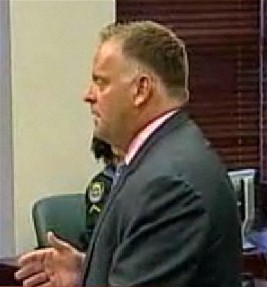
I recall putting on my shirt and tie for court while watching GMA two years ago and seeing one of my law school acquaintances, Todd Macaluso, being interviewed as the newest member of Casey Anthony's so-called "dream team" of defense lawyers.  The interview in Florida was surprising to me, as I thought Todd was a product liability lawyer in California.  Hey, headlines are headlines, right.

Todd comes from a wealthy family out east and he married well; very well.  Not interested in Harvard, NYU, or any of the tony east coast law schools, Todd collected his sheepskin right here in the "D" from the University of Detroit School of Law; class of 1987.

Before his graduation ceremony was even concluded, Macaluso was probably on a private jet to San Diego, where he hung his shingle and hasn't looked back.  And apparently he has not stopped playing around with private aircraft either, from the way the headlines read this week.

Although forced to quit the Casey Anthony case due to a serious attorney discipline conviction and imminent disbarment in California, Todd is right back in the cockpit, just in time to seize the spotlight, allegedly ferrying Ms. Anthony about the country on his private Pilatus PC-12 turbo-prop aircraft.

The national media, led by Nancy Grace, is in an absolute frenzy over Anthony's location.  Knowing Todd, he is loving every minute that he is able to steal the show by flying the infamous "Tot Mom" hither and yon.  Hopefully, his 15-minutes will expire by month's end.

Macaluso is a poster child for the adage: "image is everything".  He is acknowledged, among dozens of others, in United States Supreme Court Justice Antonin Scalia's book, Making Your Case.  A mutual friend who's been to Macaluso's home says there is a photo of Todd on his yacht with Justice Scalia, apparently a friend of the extended Macaluso family.

In 2007, Macaluso received the President's Award from the UDM School of Law.  In presenting this award, UDM acknowledged Todd's lobby efforts in Congress to regulate pharmaceutical sales over the Internet. Nothing was mentioned, however, about the opportunistic nature of his burgeoning criminal defense practice.

With the benefit of hindsight, I just have to wonder if my alma mater would have bestowed its President's Award on a graduate who soon would be disbarred for misspending client trust funds; or whether Justice Scalia would acknowledge an attorney that has not only joined forces with a most infamous client, but has positively delighted in concealing her location, while she prepares with her lawyers to fleece all of us.

Only in America folks; only in America.

http://www.clarkstonlegal.com/

info@clarkstonlegal.com

Labels: , , , , , , ,

Tuesday, July 5, 2011

New Jury Rules Could Sway Trial Verdicts

Photo: Reuters
Many comparisons have been drawn between the O.J. Simpson murder trial in the early 1990s and Casey Anthony's infanticide trial from this summer. 

Like the Simpson trial, the Anthony jury's verdict left most Americans scratching their heads, wondering about the state of the criminal justice system in America, and in their local community.  Unlike the Simpson case, however, the Orlando, FL trial was placed on the fast-track and, fortunately for everyone, the judge delivered.

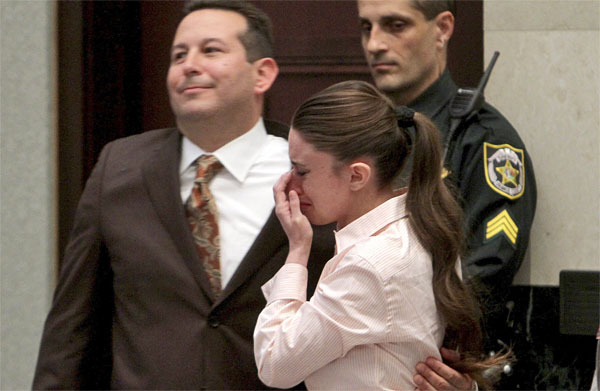
In the Anthony case, the accused mother was acquitted of all murder charges, but convicted on four counts of lying to the police.  She has been incarcerated for about two years; she could get maxed-out on Thursday to 4-years (a year for each count), with credit for time served.  Her out date could be weeks, or even days away.

Tuning-in to the trial while grinding around town tending to my own clients, I was first struck by the possibility of an acquittal when the prosecutor's case in chief was taking two days to clear a so-called "expert" on foul odors; apparently captured in special containers for later sampling.  They had experts on top of experts.

The jury, filled with non-Orlando out-of-towners, made the prosecution pay.  When she earns a 7-figure income next year, Ms. Anthony will be sticking it in all our faces.

Meanwhile, in September, Michigan begins a probationary period for a series of innovative new court rules.  These rules, designed to encourage more detailed juror involvement and participation in a case, may have changed the Anthony verdict.  Click here for a detailed discussion of the specific changes.

One of the primary innovations is the ability of jurors to discuss the case among themselves and to ask their own questions of the witnesses, as the proofs are going in.  In a huge case like Casey Anthony, you have to wonder if the new rules would make a difference in the outcome if the case was to be tried here in Michigan.

If I had to guess, I would think most Casey Anthony jurors would attest to their frustration spending half the summer listening to a parade of junk scientists. Jurors have fine antennae for junk science.

In the end, all the junk scientists in the world could not overcome the fatal flaws in this case: lack of a cause of death; and the all-in gamble of a first degree murder theory.

Here is a great take on this trial by Harvard Law Professor Alan Dershowitz.

http://www.clarkstonlegal.com/

info@clarkstonlegal.com

Labels: , , , , ,

Monday, June 13, 2011

When the Innocent Go to Prison We All Lose

Everyone accused of a crime has a right to have the matter tried before a jury with the heightened "beyond a reasonable doubt" evidentiary standard.  Sometimes, however, the jury gets it wrong.

When that happens, you have a constitutional right to appeal.  Most convictions, statistically, are affirmed at the intermediate appellate level.  From there, a convicted felon has a discretionary appeal to the Michigan Supreme Court.

The Michigan Supreme Court selects few cases each year; most petitions for a writ of certiorari, especially when they are from prison inmates, are rejected.

Once your state appellate rights are exhausted, you have the right to petition for habeas corpus in the United States District Court.  Hopefully, your state court appellate attorney had the wisdom to "federalize" your brief in the intermediate state appellate court because if not, all your constitutional issues are deemed waived.

If the Habeas petition is denied in federal district court, as most are, there is a constitutional right to appeal even further, to the United States Circuit Court of Appeals.

The United States Supreme Court is the end of the road.  A petition for a writ of certeriorari to the SCOTUS is, well, best of luck to you....

Most would agree that the incarceration of wrongly convicted individuals is one of the true horrors of our criminal justice system; a less than perfect system that sends people to prison from time to time who did not commit the crime for which they were convicted.

The State Bar of Michigan's blog recently posted some fresh literature addressing this troubling subject.  We think it's worth a look.

Over the weekend, for example, the Detroit Free Press profiled its first in a series of articles detailing a West Bloomfield family's plight following criminal sexual conduct charges.

In addition to the case profile in the Freep, a more detailed study by the Campaign for Justice and the Michigan ACLU is included in the post, tracking 13 wrongly convicted individuals in Michigan; this piece also impugns Michigan's court-appointed counsel system.

The SBM blog post also includes a link to Reason Magazine's nation-wide study featuring UM Law Professor Sam Gross who concludes that wrongful convictions are far more common than most of us believe.

We are not sure what the solution is to this problem.  Many folks in our free society seem hell-bent on breaking the law in major ways, committing "crimes against the person", to use a classification phrase from Michigan's sentencing guideline manual.  No doubt, prosecutors often have a full plate.

But when the accused is innocent, we all lose some of our individual rights, liberties and freedoms.

http://www.clarkstonlegal.com/

info@clarkstonlegal.com

Labels: , , , , , , , , ,

Friday, January 7, 2011

Email Snooping by Spouse Results in Felony Criminal Charges

Oakland County Prosecutor Jessica Cooper has elected to prosecute a Rochester Hills man for accessing his wife’s email account. The emails were accessed from a computer that the husband purchased for family use.

The criminalization of conduct involving computers and privacy has had federal and state law components. For example, in the federal realm, the Electronic Communications Privacy Act was initially passed to proscribe electronic eavesdropping and was significantly expanded in 1986 from traditional “wired” forms of electronic communication, to include all forms of digital electronic communication.

A few years earlier, the Computer Fraud and Abuse Act outlawed electronic espionage. The federal computer crime scheme also features several “technology-neutral” provisions allowing prosecution for a variety of criminal acts involving a computer.

By creating a statutory right to privacy in Internet communications, the federal law creates an expectation of privacy in our digital transmissions and provides a tool for selective prosecution.

But does that expectation of privacy extend to a marital home? To the family computer?

A Rochester Hills woman, Clara Walker, is the complaining witness in the Oakland County case against her third (former) husband, Leon Walker. The husband purchased a family computer and set-up a gmail account for his wife. Shortly thereafter, suspecting his wife was conducting an affair with her second husband, Mr. Walker accessed his spouse’s gmail account to get the proof.

Apparently, his suspicions were well-founded as the couple was divorced last year.

The price of this confirmation, however, was high. Walker has been charged with unauthorized access to a computer; a five-year felony charge due to Walker's circumstances. The case, charged early last year, has kicked around the 51st District Court and the Oakland County Circuit Court since March, surviving the defendant's motion to dismiss.  Trial has been scheduled for Valentines Day.

The unauthorized computer access provisions of the Michigan Penal Code under which Walker has been charged are part of a 1979 statute designed to combat identity theft and computer hacking.  The provisions in the act create a presumption that access to another person’s computer file or digitized data was unauthorized. Various access or password-related exceptions are available to rebut the statutory presumption.

Two prior convictions, or an amount involved in the crime between $1000 but less than $20,000, elevates this computer crime from a misdemeanor to a felony.  Cooper has received criticism for charging an individual for alleged conduct which was resolved in family court. As she'll tell you; "happens all the time."

The case recently began receiving national attention when Walker, formerly an IT professional for Oakland County, cast Attorney Ray Cassarr aside in favor of "Feiger Law".  Figures.

Mr. Walker’s trial, over which Oakland Circuit Judge Martha Anderson will preside, should present some interesting evidence. The private family circumstances leading to the Walker's divorce proceedings may be deemed relevant to the criminal case.  Also, given the way the statute is worded, some interesting defenses can be presented to a jury. Among them, the defense counsel could focus the jury on whether a spouse’s separate email account on a family computer is private and whether there is an expectation of privacy in such an account when your husband has the password.

Any conviction will most likely be appealed.  We here at the Law Blogger will keep an eye on this one for you.  Expect updates.

www.clarkstonlegal.com

info@clarkstonlegal.com

Labels: , , , , , , , ,

Saturday, December 18, 2010

Bloomfield Hills' Medical Marijuana Ordinance Challenged in Lawsuit

Bloomfield Hills passed an ordinance in October requiring card-carrying certified medical marijuana users to register with the Bloomfield Township Police Department. The ordinance also requires the submission of a form to the police disclosing the “patient’s” drivers license number and date of birth, whether the patient owns or rents their home, and identifying how many other patients share their home.

In addition, the ordinance limits the number of medical marijuana patients that can live at one address and prohibits growing medical marijuana anywhere in Bloomfield Township. Violation of the ordinance is a 93-day misdemeanor carrying a $500 fine.

Bloomfield Hills is among several municipalities that have passed ordinances that restrict the provisions of the Medical Marijuana Act, criminalize conduct authorized by the Act, or both.

Now the ordinance is the subject of a lawsuit filed against the township by two crafty [their “clients” are John and Jane Doe] veteran criminal defense attorneys: Tom Loeb and Neil Rockind. The lawsuit, undoubtedly heading to the Michigan Supreme Court, does not seek money damages but rather, declarative and injunctive relief.

Township by township, the MMA is coming under fire for a glaring flaw: it is a ruse for recreational pot users. Yes, there are legitimate medical marijuana users out there, in spades, for whom the MMA was designed to help. There are also many “patients” whose medical records were reviewed with a passing glance by a physician more interested in the high-volume review fees than in determining whether the person has a genuine chronic medical condition of the sort required by the MMA. The LawBlogger wonders how many certified users, among the tens of thousands of backlogged applicants, are under the age of 25; or are college kids whose only chronic condition is their desire to party down.

As these legal challenges grind through the court system over the next two or three years, the MMA will be subject to death-by-ordinance on a township-by-township basis. Attorneys Rockind and Loeb remarked in their press conference announcing their lawsuit that the ordinance in Bloomfield Hills cannot stand to the extent it contradicts a valid Michigan law.

While it may not be the best example of tightly drafted legislation; while it undoubtedly suffers from problems of perception and misconception, the MMA is a valid state law. The appellate courts will have no choice but to invalidate ordinances that limit the scope of the Act, or criminalize it’s legitimate purposes.

Once again, we pose the question: should marijuana just be outright legalized in Michigan?  We are interested in your view on this subject.  To weigh in, simply comment on this post or register a comment on the discussion board of our FaceBook fan page.

For more information about the MMA and its certification process, click on this link.

Ludington Update:  Bloomfield Hills is not the only municipality seeking to restrict the use of medical marijuana; check out the moratorium proposed in Ludington.

Royal Oak Update: Feb 3, 2011.  Now, Royal Oak is getting in on the act of restricting patients' rights under the MMA by proscribing grow operations within the city limits.

Ann Arbor Update:  Of all places, Ann Arbor is also getting in on the ordinance dance.  For its part, however, there seems to be a delay in bringing the issue to a vote, as the AA City Council continues to revise the proposed ordinance.  Compared to other municipalities, the ordinance proposed in Ann Arbor seems much more in-tune with the MMA.  As the city attempts to properly define the terms of its ordinace, one medical marijuana entrepreneur is challenging the ordinance in a law suit before it has even passed, claiming unconstitutional vagueness.

Montana Update:  For it's part, the Republican-controlled state legislature is poised to pass a bill repealing the MMA in that state.

info@clarkstonlegal.com

http://www.clarkstonlegal.com/

Labels: , , , , , , , , , , ,

Thursday, December 2, 2010

Comic Book Explains Arrests and Lawyers to Teenage Children

In New York City, anyone arrested under the age of 16 is now provided an informational pamphlet (four pages) explaining the criminal process from the booking stage right through sentencing.

Is it me, or do others find this one of the latest signs of the apocalypse?  This is a sad commentary.

This comic book does not mention the presumption of innocence or the specific charges facing the youth (although it has the feel of a possession rap).  There is an assumption that the arrest was valid.  Defenses are not referenced.

In the end, the judge finds the urban youth guilty.  Sad but realistic. [This link will download a PDF of the entire comic.]

The concept of this instructional graphic pamphlet was hatched by the Youth Justice Board of the non-profit Center for Court Innovation whose mission is to teach high school students about public policy,  leadership and public speaking.

Khaair, a Justice Board member who did not want his last name published, said they decided on the comic book as their project because, "the youth of New York don't have representation and we really need a voice -especially for the stuff that involves us."

This "stuff" apparently involves cops, arrests, criminal charges, drugs, and lawyers.  All in a day's work over in Queens at the Francis Lewis High School where Khaair is a senior.  BTW: he wants to be the Mayor of Gotham and in our opinion, he's off to a great start.

www.clarkstonlegal.com

info@clarkstonlegal.com

Labels: , , , , , ,