Blogs > The Law Blogger

The Law Blogger is a law-related blog that informs and discusses current matters of legal interest to readers of The Oakland Press and to consumers of legal services in the community. We hope readers will  find it entertaining but also informative. The Law Blogger does not, however, impart legal advice, as only attorneys are licensed to provide legal counsel.
For more information email: tflynn@clarkstonlegal.com

Tuesday, February 6, 2024

Groundbreaking Manslaughter Case Submitted to Oakland County Jury

There can be no doubt that America is in the midst of a protracted epidemic of mass shootings. Over the past decade, barely a month goes by where we are not treated to horrific headlines from some type of shooting where multiple people are killed. 

A mass shooting in the United States is defined as an incident where four or more people are shot, wounded, or killed in a single event, not including the shooter. On November 30, 2021, four students were killed by another student at Oxford High School in Oakland County, MIchigan. 

The case against Jennifer Crumbley, Mother of the Oxford High School shooter, was submitted to an Oakland County jury last Friday. The shooter's father is scheduled for trial in March. In this pair of truly groundbreaking cases, the shooter's parents were each charged with four counts of involuntary manslaughter. Their son has already pled guilty to four counts of first degree murder and was sentenced as an adult to life without the possibility of parole. 

Groundbreaking Case; Complicated and Unusual Circumstances

America has become accustomed to mass shootings; we've become numb to these frequent tragic events and their painful aftermath. Congress cannot pass effective gun control measures and, even if they did, our Second Amendment right to bear arms is a foundational bar to comprehensive gun regulation. 

Mass shootings usually end with the shooter taking his or her own life, or being charged with multiple counts of murder and other capital felonies. In Michigan, a capital felony is any crime where life imprisonment is a potential sentence upon conviction. 

Mental illness is highly correlated with mass shootings; a very high percentage of mass shooters have some form of acute mental illness. The Crumbley case is no different.

The Oxford High School shooting was the first mass shooting -according to the above referenced definition- in Oakland County, Michigan. The case has some very unusual factual aspects. 

First, following the shooting, the Oakland County Sheriff attempted to locate the shooter's parents but were unable to do so because, as it turned out, they went on the lam in Detroit. As a result, the Oakland County Sheriff scrambled a state-wide manhunt for James and Jennifer Crumbley, locating them cowering in a warehouse in the 313.

Second, the Crumbleys allegedly purchased the Sig Sauer 9 mm used in the shooting rampage for their son as a Christmas gift, although he was not elibigle to legally own or possess a gun due to his minority. Jennifer Crumbley testified in her own defense; always a highly risky prospect. She testified that she helped her son research and purchase the weapon.

Third, any time an attorney allows her client to testify, evidentiary doors often get opened that damage the defendant on cross examination. In this case, Jennifer Crumbley testified about her son's text communications about ghosts and demons; trying to explain it all away and to justify why she neglected to get her son professional help. 

The jury heard evidence that Jennifer thought her son was "weird"; that his only hobby involved shooting guns; that they, as a family, made trips to the shooting range; that she researched mental illness on the eve of her son's shooting rampage, but never took him to a professional or even thought he had a mential illness. 

On and on it goes. No wonder the Oakland County Prosecutor believes she can convict on a manslaughter theory. Technically, the prosecutor tried the case under two separate and distinct manslaughter theories; more on that below. 

To be fair, national headlines and publicity notwithstanding, the prosecutor had to bring these charges. Under such facts, not to do so would be political suicide. Nor could she have extended the Crumbleys any plea offer; also political suicide. Karen McDonald had to go to a jury trial in this case. In Michigan, county prosecutors are up for election every four years. In the midst of America's mass shooting epidemic, lack of parental supervision is a legitimate theory to assign culpability in some cases. 

In some ways, the Crumbleys are in a similar liability position as the parent of an infant or toddler who staggers into a room with a loaded weapon and shoots someone. We've seen dozens of such cases across the country. 

Jury Instructions

In criminal cases, there are a set of standard jury instructions that set forth some of the basic procedural and substantive concepts involved in our criminal justice system. They are standard to the extent that they are read to juries in every criminal case. There are also special jury instructions that cover some of the unique circumstances of a particular case, like the case of the Crumbley parents.

The Oakland County jury was charged with the following instructions for involuntary manslaughter. The jury instructions, read to the jury by Oakland County Circuit Judge Cheryl Matthews, included two separate theories of manslaughter; one involving the legal duty of due care contained within the concept of neglegence, the other involving gross neglegence. 

Regarding the gross negligence theory, Judge Matthews charged the jury that the Oakland County Prosecutor had the burden to prove each of the following two elements beyond a reasonable doubt, which is the highest evidentiary burden in Michigan:
  • First, that the defendant caused the death of the student(s), that is, that the student(s) died as a result of storing a firearm and its ammunition, so as to allow access to the firearm and its ammunition by her minor child; and 
  • Second, in doing the act that caused the student's death, the defendant acted in a grossly negligent manner.
These instructions were repeated for each of the four deceased Oxford High School students. 

Regarding the ordinary negligence theory, a special jury instruction was fashioned and read to the jury:

The defendant is charged with the crime of involuntary manslaughter resulting from the failure to perform a legal duty. To prove this charge, the prosecutor must prove each of the following elements beyond a reasonable doubt:
  • First, that the defendant had a legal duty to the decedent. The legal duty here is one imposed by law. In Michigan, a parent has the duty to exercise the duty of reasonable care to control their minor child so as to prevent the minor child from harming others or prevent the minor child from conducting themselves in a way that creates an unreasonable risk of bodily harm to others. This duty arises when both of the following are true: a) the parent knows or has reason to know that they have the ability to control their minor child; and b) the parent knows the necessity and opportunity to exercise such control.
  • Second, that the defendant knew of the facts that gave rise to the duty.
  • Third, that the defendant neglected or refused to perform that duty and that her failure to perform it was grossly negligent to human life.
  • Fourth, that the death of the student(s) was directly caused by defendant's failure to perform this duty, that is, that the student(s) died as a result of the defendant's failure to exercise reasonable care to control her minor child so as to prevent the minor child from intentionally harming others or the minor child from so conducting himself so as to create an unreasonable risk of bodily harm to others when the defendant knew she had the ability to control her minor child and knew of the necessity and opportunity to do so. 
The jury was also instructed that the shooter's act of shooting was reasonably foreseeable; they were instucted that either or both of the prosecutor's theories were sufficient to convict the defendant. Because one of the prosecutor's witnesses qualified as an expert in computer forensics, the jury was instucted on consideration of expert witness testimony; that they did not have to believe the expert's opinion but that they needed to decide how much weight to give to such testimony. 

Because this is truly a momentus case under the intense scrutiny of our national media, the jury could be out for several days considering the complex jury instuctions. 

Involuntary Manslaughter Law in Michigan

Involuntary manslaughter is a 15-year felony meaning that if convicted, Jennifer Crumbley faces up to 15-years in a Michigan Department of Corrections prison. Normally, defendants without significant prior felony convictions do not receive the maximum sentence. 

But this is not a normal case; this is a high-profile case that has the attention of the entire nation because it is believed to be the first time the parents of a mass shooter have been charged with manslaughter. 

Unlike voluntary manslaughter, involuntary manslaughter does not require establishing an intent to kill the victims. Involuntary manslaughter is highly circumstance dependent. The Michigan Supreme Court has described it as:
Involuntary manslaughter is the killing of another without malice and unintentionally, but in doing some unlawful act not amounting to a felony or naturally tending to cause death or great bodily harm, or in negligently doing some act lawful in itself, or by the negligent omission to perform a legal duty. 
This definition from our common law, of course, ties into the jury instructions above. Clear as mud, right?

An average juror, understandibly, may have some difficulty keeping the concepts straight. Judge Matthews did instruct the Crumbley jury that they could convict Jennifer Crumbley if they were convinced of either of the prosecutor's theories of culpability, i.e. the gross negligence theory or the breach of parental legal duty theory.

Full Disclosure

We here at the Law Blogger go way back with many of the players in these groundbreaking cases. We've known Judge Matthews since she was an assistant prosecutor in Oakland County; this blogger appeared before Judge Matthews just last week; our lawyers go back with Oakland County Prosecutor Karen McDonald to the days when she was a family law lawyer with the Dickenson firm, and then a family court judge; we have had cases where Karen McDonald represented the opposing party and we appeared before former judge McDonald in dozens of cases when she was on the family court bench. 

We've known defense counsel Shannon Smith, and currently have our own capital case with Smith's former law partner Mariel Lehman, James Crumbley's defense counsel. Our law firm has had to coordinate the trial in our capital case in Livingston County with James Crumbley's trial. 

So, along with the rest of the country, we will anxously await the jury verdict in this groundbreaking case and the in the James Crumbley case. A guilty verdict could redefine a parent's duties to control the conduct of their minor children; something that many Americans believe is long overdue. 

On the other hand, Michigan jurisprudence has long been settled that the criminal acts of third parties are not deemed to be foreseeable. Should an exception be made when the criminal actor is your minor child? 

Post #638


Labels: , , , , , , , ,

Saturday, April 8, 2017

Revenge Porn Defendants Ordered to Pay

Over the past few years, the concept of revenge porn -posting nude pics on the Internet of an ex-lover- has progressed into the modern lexicon. First a social media phenomena, it has come to the attention of law makers and law enforcement officers over the past year.

Several civil cases in Oakland and Macomb Counties have resulted in significant civil judgments against the revenge pornographers. Just last week, for example, a woman in a Macomb County case was awarded $600,000 by a judge following a hearing; in a colossal mistake, the defendant elected to represent himself.

The Macomb County case follows a case from last year in Oakland County where Judge Martha Anderson awarded a plaintiff half a million dollars. Also, one year ago, the Michigan Legislature joined 26 other states in outlawing revenge porn, making it a 93-day misdemeanor; a second conviction is punishable by up to a year in the county jail.

Passage of the new law makes it a crime, under certain circumstances, to disseminate sexually explicit material of an adult on a computer without the subject's consent. If a person becomes a victim of revenge porn, securing a criminal misdemeanor conviction will provide momentum for a civil cause of action.

The successful litigants in Macomb and Oakland Counties presented evidence of their damages such as employment difficulties.

If you have been a victim of revenge porn, contact our law firm to discuss your options.

Post #584
www.clarkstonlegal.com


Labels: , ,

Wednesday, October 10, 2012

GPS "House Arrest" Tether Not Available for Felony Drunk Driving Sentences

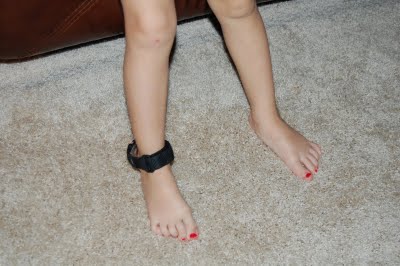
A few years back, this blog touted Oakland County's "virtual work release" program.  To alleviate chronic jail overcrowding, the Sheriff developed the program which utilizes a global positioning system to ensure that offenders are truly under "house arrest" when they complete their work day.

There is a certain class of offenders, however, that cannot take advantage of the virtual work release program, and must do their time in a physical jail cell.  The Michigan Court of Appeals' decision in People v Pennebaker takes the "house arrest" option away from sentencing judges in felony drunk driving cases.

In Pennebaker, a case originating in the Oakland County Circuit Court, the Court of Appeals held that people convicted of a felony drunk driving offense must perform a minimum of 30-days incarceration pursuant to the drunk driving statute, and that "incarceration" cannot involve "house arrest", no matter how technologically sound the GPS tether system.

 Oakland Circuit Judge Phyllis McMillen, impressed with the Oakland County Sheriff's relatively new virtual work release program, decided to utilize the tether-based monitoring system for the drunk driving punishments she was meting out.  Sounds logical to us over here at the Law Blogger.

Problem: The Oakland County Prosecutor took issue with the meaning of the word "incarceration", arguing at both Pennebaker's sentencing and on appeal that house-arrest does not cut it; felony drunk drivers must actually sit down for a minute in the county jail.  The Court of Appeals agreed, reversing Judge McMillen's sentence, and sending the case back to McMillen for re-sentencing.

In doing so, the intermediate appellate court quoted the following language from one of its earlier decisions on point:

Under no circumstances can we reasonably  conclude that confinement in one’s
home or apartment is the equivalent of confinement “in  jail.”  This is so even
where, as here, the conditions of home confinement require the person confined to
go directly to work, to return home immediately from work, and to be at home at
all times unless approval is given by  a probation officer.  Home detention does
not include the highly structured setting of a prison or jail.  One cannot remain on
the phone for extended periods, invite friends for extended visits, order a pizza,
watch television during periods of one’s own choosing, or have free access to the
refrigerator in jail.   
 We here at the Law Blogger would like to know what you think about the difference between tether-based "house arrest" and a jail sentence.  We welcome your comments.

www.clarkstonlegal.com
info@clarkstonlegal.com

Labels: , , , , , , ,

Sunday, August 5, 2012

Michigan Supreme Court Acknowledges an "Impossibility" Defense to Felony Child Support

This blog has covered the child support saga of Ms. Selesa Likine.  Her felony child support conviction was just reversed by the Michigan Supreme Court, and her case has been sent back down to the Oakland County Circuit Court.

The family court was created by statute pursuant to the Michigan Constitution back in 2000; now, there is a family court division for every county in Michigan.  Family courts issue support orders that obligate a parent to pay a specified sum each month for the support of their minor children.

Ever since parents have been ordered to pay child support, there have been those who cannot or will not make their required  payments.  There are different reasons for not paying: some withhold payment from their ex-spouse for revenge; others simply cannot afford to pay, or do not put a high priority on their child support obligation.  [e.g. the "Worm" aka Dennis Rodman.]  Still others find it impossible to satisfy their court-ordered obligation based on hard economic circumstances.

Regardless of the reason, when a child support payor fails to pay pursuant to a court order, an arrearage builds-up and the courts take notice.  Quite apart from the family court, the county circuit courts of general jurisdiction are the courts where felony criminal matters are prosecuted.

The Michigan Penal Code has a law on the books known as "failure to pay child support"; a four-year felony.  This felony has always been considered a "strict liability" crime, meaning that there is no defense to the charge once the prosecutor proves that the family court issued a support order and the payor, for whatever reasons, did not pay.

On Tuesday, the Michigan Supreme Court addressed the felony child support statute in People v Likine.  This case is significant to the extent that it expressly reverses a Court of Appeals decision that precludes a defendant from asserting any "ability to pay" defense whatsoever.  The Likine Court held that "impossibility to pay" is an affirmative defense on which a jury can be instructed at a trial provided certain offers of proof are tendered.  Also, the Court reaffirmed that, despite the availability of this affirmative defense, felony child support remains a "strict liability" crime.

In the initial divorce case, Selesa Likine was diagnosed with depressive schizoaffective disorder.  Family Court Judge Linda Hallmark initially ordered her to pay only $54 per month in support; a relatively low amount.

Likine's support was increased, first to $184 per month then to $1131 per month, on the basis of "imputed income".  At a support hearing conducted before the FOC Referee, evidence revealed that Ms. Likine made [false] representations of high income on two mortgage applications in order to purchase an expensive home.

Based on these representations, and based on the  projected earnings of someone paying on that large a mortgage, the FOC Referee imputed income of $5000 per month to Likine.  Of course, this was a fiction; not only did Likine never earn that much income, she basically had no chance whatsoever to satisfy her new increased child support obligation.

Enter the criminal charge against Ms. Likine.  When her lawyer tried to "tell it to the judge", and then to the jury, about her lack of income, it was too late.  The trial judge relied on the holding of a Michigan Court of Appeals case [People v Adams] precluding Likine from presenting any evidence on her so-called "inability to pay."

Bottom line: now, a felony defendant is able to offer proof of an "impossibility" to pay, but not an inability to pay.  The latter concerns must still be addressed to the family court.  The reason is that our criminal jurisprudence requires a "mens rea" or "guilty mind" as a required component to every crime listed in the Michigan Penal Code.

Note to attorneys: The Likine case was a companion case with two other consolidated cases.  In those other cases, the felony child support convictions of the child support payors were NOT reversed on the basis that neither defendant had preserved the "impossibility to pay" issue in the trial court.  

Just sayin; had they done so, those convictions also may have been reversed.

www.clarkstonlegal.com

info@clarkstonlegal.com

Labels: , , , , , , ,

Tuesday, June 5, 2012

Michigan Supreme Court Rules on Medical Marijuana

This is a tale of one statute and two defendants.  One defendant will be sporting a conviction for marijuana possession, while the other defendant's charges are now dismissed.

This week, the Michigan Supreme Court decided an important case involving Michigan's Medical Marijuana Act.  The case, People v Kolanek, consolidated the separate convictions of Alexander Kolanek, and Larry King; the former an Oakland County case, the latter from Shiawassee County.

As detailed by this blog over the past three years, the Michigan Medical Marijuana Act has had a brief and tortured existence.  Prosecutors, law enforcement and even judges have taken a restrictive view of the use and immunities provided by the Act.  With much success, until now, they have managed to limit the use, or even the assertion of the affirmative defense set forth in section 8 of the Act.

Not surprisingly, several cases have percolated up through Michigan Court of Appeals.  Two of these cases culminated in the High Court's Kolanek decision.

In the King portion of the decision, Larry King grew six marijuana plants in an enclosed locked dog kennel.  King had a valid medical marijuana registration card.

He moved to dismiss the case against him at both the district and circuit courts; the latter agreed that he was entitled to assert the affirmative defense under the Act and dismissed the case.  The Court of Appeals reversed the dismissal and remanded the matter back to the trial court.

In Kolanek, the defendant was arrested with a half dozen joints on his person.  A week after his arrest, he obtained a statement from his physician that he would receive a palliative benefit from the use of marijuana; Mr. Kolanek apparently suffered from Lyme disease.

Interestingly, the circuit court in this case held that, even though Mr. Kolanek did not obtain his physician's statement until after his arrest, the affirmative defense in the Act was nevertheless still available to him on the basis that he did at least secure a statement from the treating physician.

Kolanek's case also moved through the Court of Appeals, which reversed the circuit court, holding that to avail oneself of the affirmative defense of the MMA, a person must secure a physician's statement prior to one's arrest for marijuana possession.  Makes sense, don't you think...

The High Court reversed the Court of Appeals in King, holding that the MMA sets forth two separate defenses: one is the affirmative defense while the other is a broader immunity to prosecution.  A defendant charged with possession may assert the affirmative defense, even if that defendant has not yet obtained a medical marijuana registration card.  In order to secure a complete immunity from prosecution, however, an accused must have been issued said registration card and otherwise be in compliance with all the requirements of section 4 of the MMA.

The decision is also notable in that it affirmed the intermediate appellate court's decision in Kolanek to the extent that a defendant must have secured a physician's statement prior to asserting the affirmative defense provided for in the MMA.

The local blogosphere has hailed the Kolanek Court as a victory for medical marijuana users.  The decision will be cited in support of the following tenets within the medical marijuana jurisprudence:
  • The MMA provides for two separate and distinct protections from marijuana prosecution: an affirmative defense available to assert to a jury for accused persons that have received a physician's statement that marijuana is therapeutic treatment of a chronic condition and a broader immunity from prosecution for those issued a registration card; 
  • The decision affirms the MMA's definition of the legal, albeit limited use of marijuana; 
  • The immunity set forth in section 4 of the MMA is broadly construed; 
  • Interpretations of the MMA must give effect to the intent of the electorate through the passage of the medical marijuana initiative.
This may not be the end of the medical marijuana cases.  The issues of cash pot transactions and inter-patient transfers are winding through the court system.

For now, however, at least defense attorneys can get down to the business of asserting the affirmative defense on behalf of their clients, as provided by the express language of the MMA, and not have this tool removed from the shed by over-zealous prosecutors and wrong-headed jurists.

Folks, as always, the best way to get a marijuana possession charge dismissed is to carefully comply with the requirements of the MMA, and obtain your registration card before you purchase, grow, or possess marijuana.  After your registration card has been issued by the State of Michigan, be sure to stay within the strict limits of the Act.

Good luck out there.

www.clarkstonlegal.com

info@clarkstonlegal.com


Labels: , , , , , ,

Saturday, May 26, 2012

Convicting the Child Support Payor for Non-Payment

In June, the Oakland County Bar Association has asked me to present to fellow lawyers on the topic of felony child support cases.   Like any area of the law, what at first appears simple, really a matter of strict liability, takes on complexity once you start looking at the details.

Over the past ten years, prosecutors began addressing the problem of unpaid child support in Michigan, taking cases from the family courts, and charging the errant payors with felonies in the circuit trial courts.  As a result, millions of dollars have been collected that otherwise would not have been paid.  Also, dozens of payors, both Fathers and Mothers, have gone to jail; some to prison.

During this wave of prosecutions, many delinquent payors have challenged the constitutionality of Michigan's felony non support statute on the basis that it essentially creates a "debtor's prison".  The "inability-to-pay" defense, viable at one time, was removed by the legislature with the passage of the most recent version of the statute in November 1999.

The constitutionality of this version of the statute, particularly the removal of the "inability-to-pay" clause, was tested a few years back in the People v Meldman case; a case from Oakland County.  Defendant challenged the family court's findings on the imputation of his income, and challenged the felony child support statute on its face.  Conviction affirmed.

The Law Blogger covered the basic ground on this subject some years ago, in these earlier posts: 02/15/2010 and 12/14/2010.  These posts covered the UM Law's innocence project and their challenge to the felony child support act's constitutionality.

The case we've been waiting for, People v Likine, also from Oakland County, was fully briefed for the Michigan Supreme Court last April [including amicus briefs from both the Prosecuting Attorneys Association of Michigan, and a powerful group of Michigan Criminal Law Professors], argued in October, and the High Court's opinion deciding the case is expected any day now.

Likine deals, in astounding depth, with the bed-rock constitutional issue of whether you can be jury tried for a crime involving non-payment, without being able to put on a defense of an inability, or even an impossibility, to pay the court-ordered obligation.  Related to this issue is whether a defendant can collaterally attack a statute, introducing evidence from the family court [on issues of payment history, income levels and availability of funds] into a court of general jurisdiction: i.e. the Oakland County Circuit Court.

One more recent development since that post is last June's SCOTUS decision in Turner v Rogers, holding that a child support payor facing incarceration for non-payment is afforded legal counsel under the Sixth Amendment of the United States Constitution.  A rare example of SCOTUS reviewing a state court decision with roots in family law jurisprudence.

Great stuff.  Stay tuned and we will be sure to convey how the Michigan Supreme Court views all this.  Hopefully they will issue their Likine decision prior to the OCBA presentation to my colleagues...

www.waterfordlegal.com

info@waterfordlegal.com


Labels: , , , , , , , ,

Wednesday, November 9, 2011

Wayne County Circuit Court Rolls Out E-Filing

Yesterday, the Wayne Circuit Court joined Oakland and a few other select counties that accept electronic case and document filings.  For the time being, however, only Wayne County's contract case filings, coded with the "CK" case code, are mandatory e-file cases; the rest of the docket still requires old-fashioned paper.

Oakland County has had e-filing for years; it has personally saved me hundreds of man-hours and my clients thousands of dollars.  There are still docket pockets in Oakland County, however, that have resisted the e-filing system.  Divorces with children, for example, have eluded Oakland County's e-file requirement.

An attorney must do a few proactive things to successfully get on board with the e-filing requirements.  First, invest in a good computer system and Internet connection.  Second, go to the training sessions routinely offered by the courts and bring your support staff.

While e-filing is here to stay, some critics assert that e-filing requirements reduce access to the court system for in pro per litigants who lack sufficient computing capital for electronic filing.  For these folks, there is still a paper option, but there are additional hoops to jump through.  Folks just need to get on board.

There can be no doubt that electronic filing is here to stay.  The federal system has been completely electronic via the PACER system for a decade; the Michigan appellate courts have been on an electronic filing system [albeit a different one from the county courts] for years and it works great.

Although we are still several years off from a 100% electronic filing system, it's coming.  The next hurdle for attorneys will be to make the commitment to a completely paperless law office.

www.clarkstonlegal.com

info@clarkstonlegal.com

Labels: , ,

Friday, October 8, 2010

Oakland Circuit Judge Potts Fosters Jury Innovation


Judge Wendy Potts has been conducting an interesting pilot program on the jury process in Oakland Circuit trials.  She maintains the only courtroom in one of Michigan’s busiest venues where jurors are encouraged to submit written questions to witnesses, take notes during the trial, and discuss the case during their morning and mid-afternoon breaks.

Once the jury is empanelled, each juror is provided a notebook with all the jury instructions and, in civil cases, a set of stipulated trial exhibits for their convenient reference (or distraction) throughout the trial. 

The jurors welcome the opportunity to interact with the input of proofs.  Judge Potts instructs jurors to avail themselves of the opportunity to submit written questions to each witness called to testify.   

These are significant modifications to the “classic” jury trial in Michigan.  In other county trial courts, jurors are expressly instructed not to discuss the case with anyone during the trial (which may take several days, even weeks).  In the classic jury trial model, jurors must keep the facts of the case to themselves until they retire to the jury room for deliberations with their chosen colleagues.  Nor are jurors usually given notebooks to write down their thoughts.

In Judge Potts’ court, however, jurors are encouraged to take a stab at figuring out just what is really going on by writing out their own questions at the conclusion of examination by the attorneys.  Judge Potts fields the written questions and discusses them with the lawyers in a bench conference to determine whether the question(s) should be posed to the witness.  

This has an obvious effect on how the proofs of the case are submitted to the jury.  Once the attorneys complete their scripted examinations, the jurors have the opportunity to follow-up.

Instead of keeping what they have just seen and heard to themselves for the duration of the trial, they are permitted to discuss the testimony, as it unfolds; including the answers to their own questions. 

No such a thing as a “dumb question”, right… 

On Thursday and Friday of this week, I had the opportunity to sample Judge Potts’ experimental jury trial method in a criminal felony case.  At least one juror had a question for every witness.  Judge Potts asked the attorneys at the bench whether we wanted the question posed to the witness.  

While I did not mind the (benign yet telling) questions posed by the jurors, it concerned me, as defense attorney, that the jurors were free to discuss the case while the proofs were going in.  

But would jurors, so encouraged, seek other means of obtaining information about the case?  Perhaps they would Google the names of witnesses or the attorneys.  Judge Potts expressly warned them not to do this.

It is in the nature of trial attorneys to want control of the information being submitted to the fact finder.  After all, ours is a results-oriented business.  

In the jury trial that concluded today, my client was acquitted.  It was difficult to tell weather the innovations had any effect on this outcome.

www.clarkstonlegal.com

info@clarkstonlegal.com

Labels: , , , ,

Wednesday, October 6, 2010

Oakland County Judge Shuffle Update

Honorable Edward Sosnick
Since we last addressed this topic, some things have changed.  Although former 51st District Court Judge Phyllis McMillen is now installed at 1200 N. Telegraph, she was assigned to a general docket courtroom (civil matters and criminal felonies) rather than the Family Court Division, as we previously reported.

Also, Oakland County Family Court Judge James Alexander did not take over departed Judge Mark Goldsmith's docket but rather, is scheduled to "swap dockets" with long-time Oakland County Circuit Judge Edward Sosnick.

The last time Judge Sosnick handled a divorce was prior to the statutory creation of the Family Court back in 1998.  As a seasoned jurist, however, he will acclimate quickly to the divorce docket as he rides-out his last two years on the bench.

Finally, long-time Oakland Family Court and Probate Judge Eugene Moore is retiring from the bench at the end of the year.  His replacement will be determined via the November 2 election between candidates Kathleen Ryan and Dana Hathaway.

If you lose track of your newly assigned judge, reassignments can be tracked by using the Oakland County Circuit Court's Court Explorer.

Be sure to vote on November 2, and don't forget to make your selection for judge on the non-partisan ballot!

info@clarkstonlegal.com

www.clarkstonlegal.com

Labels: , , , , ,

Thursday, November 12, 2009

Two Day Jury Trial in Oakland Circuit Results in Not Guilty Verdict


Just before the holiday, I heard the words that a defense attorney craves; "not guilty". I was in a two-day jury trial before Oakland County Circuit Judge John McDonald. I think he's a great judge, mostly because I've never lost a trial in his courtroom. This one made four straight.

The odds seemed stacked against acquittal, as usual. The principal charge was assault with intent to do great bodily harm (less than murder). The second count, commission of a felony with a firearm, carried a mandatory two-year minimum prison sentence upon conviction.

My client was a middle-aged woman with no criminal record. The alleged victim, however, had done 15-years in prison for armed robbery. After an evening of drinking and socializing, the two (in an on-again off-again relationship) retreated to my client's home. An argument boiled over and two shots were fired from a revolver. One shot hit the victim in the foot.

At trial, my client took the stand and testified she shot the weapon toward the "victim" in self defense. The jury believed her, and she avoided the two-year mandatory prison sentence.

One of the keys to the acquittal was effective cross-examination of the so-called victim. He was made to look foolish, admitting to contact with and agression toward my client.

The case illustrates how the tough plea policies of the Oakland County Prosecutor's office can sometimes force a jury trial.  In this case, the client was most concerned about doing two years in prison. She could appreciate the seriousness of the gun shots, and the significant injury one of the bullets did to her former boyfriend. Willing to do some jail time on an assault guilty plea, she could not bring herself to sign-up for two years in prison. But that's what the prosecutor wanted her to do.  They did not offer to drop the felony-firearm charge.

So the defendant rolled the bones and exercised her right to trial. In this case, it was worth the effort. This client saved two years of her life.

info@clarkstonlegal.com
http://www.clarkstonlegal.com/

Labels: , , , ,